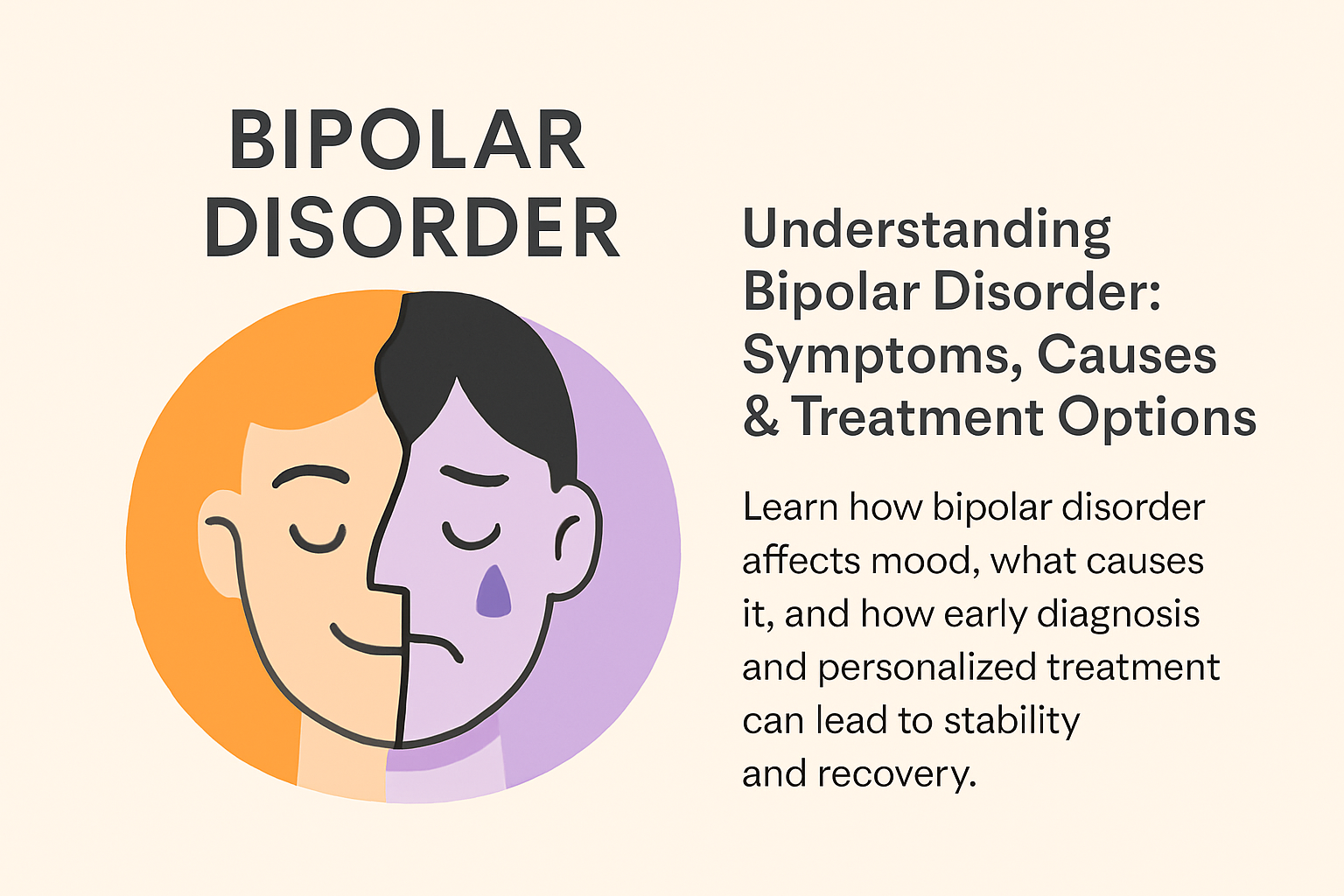
Bipolar disorder is a complex mental health condition that affects a person’s mood, energy, and ability to function. Formerly known as manic-depressive illness, it causes intense emotional states that cycle between mania (highs) and depression (lows).
Early recognition and proper treatment of bipolar disorder are essential for long-term well-being and daily stability.
🔄 Types of Bipolar Disorder
There are several types:
- Bipolar I Disorder: Characterized by manic episodes lasting at least 7 days, often with depressive episodes.
- Bipolar II Disorder: Patterns of depressive episodes and hypomania (less severe manic periods).
- Cyclothymic Disorder (Cyclothymia): Periods of hypomanic and depressive symptoms lasting 2 years or more, but not meeting full criteria for bipolar I or II.
⚠️ Common Symptoms
During Manic or Hypomanic Episodes:
- Elevated or irritable mood
- Increased activity or energy
- Racing thoughts
- Reduced need for sleep
- Impulsive or risky behaviors
During Depressive Episodes:
- Persistent sadness or hopelessness
- Fatigue and loss of energy
- Difficulty concentrating
- Sleep disturbances
- Suicidal thoughts (in severe cases)
🧬 What Causes Bipolar Disorder?
While the exact cause isn’t fully understood, factors include:
- Genetics – Often runs in families
- Brain structure and function – Changes in brain chemicals and structure
- Stress and trauma – Major life changes or trauma can trigger episodes
- Substance use – Alcohol or drug misuse can worsen symptoms
🩺 How is Bipolar Disorder Treated?
Effective treatment typically combines:
- Medication – Mood stabilizers, antipsychotics, and antidepressants
- Psychotherapy – Cognitive Behavioral Therapy (CBT), psychoeducation
- Lifestyle changes – Sleep hygiene, stress management, regular routines
- Support groups – Peer connection reduces stigma and offers emotional support
With the right care, many individuals with bipolar disorder live productive, balanced, and fulfilling lives.
💬 Final Thoughts
Bipolar disorder is not a personal failing. It’s a medical condition that deserves compassion, support, and evidence-based treatment. The earlier it’s diagnosed, the better the outcomes.
If you or a loved one may be experiencing symptoms of bipolar disorder, don’t wait to seek help. Understanding and support are the first steps to healing.